

Cloud migration presents a more scalable, flexible, and cost-effective solution for businesses today, being an integral component of their digital transformation strategies. But not every migration will result in any success. Poor planning, unclear cloud migration goals, security issues, budget overrun, and lack of skills are some of the most popular reasons for cloud migration failure.
It’s a common fact that challenges with moving to the cloud are ubiquitous, but for the most part they can be circumvented with the proper approach. Organizations that choose to implement proper cloud migration planning, map out the cloud migration roadmap, and embrace the best cloud migration practices have a higher probability of successfully migrating to the cloud.
In this guide, you will learn about the reasons behind cloud project failures, the most significant cloud migration risks, and the factors essential for successful migration to the cloud.
Understanding Cloud Migration Failure
Cloud migration failure occurs when a migration initiative doesn’t achieve its goals or objectives, reduce costs, improve performance, increase protection and security, or increase scalability. Organizations are transitioning to the cloud to enjoy these advantages, but rough execution can result in delays, going over budget, downtime, and operations-related problems.
Failing to plan a cloud migration properly or to have clear migration goals, having gaps in securing information in the cloud, lacking the in-house expertise to work in the cloud, and missing the dependencies for the applications to be migrated. For many such cases, engaging in cloud migration comes with business consequences and timelines. Migration to the cloud can have consequences and related timelines that can be risky.
Another large cloud migration hurdle is assuming the app migration and vast data migration are less complex than they actually are. If you do not have the proper strategy in place and preparation beforehand, organizations can be hit with the hidden costs of cloud migration and performance concerns after migration.
The good news is that the majority of cloud migration pitfalls can be avoided. Organizations that follow a customized cloud migration roadmap, preempt the risks, and use cloud migration best practices can enhance their likelihood of successfully redeploying to the cloud.
Top Reasons Why Cloud Migration Projects Fail
Cloud migration presents many benefits, but moving workloads to the cloud is only part of the solution. Unforeseen challenges are common in many organizations due to a lack of planning, resources, and expertise for an effective transition.
Lack of a Clear Migration Strategy
A key factor in why migration projects to the cloud often are a failure is due to the lack of clear strategy. Without a migration plan, timeline, and metrics for success, organizations can find themselves with problems, cost overages, and delays.
Incomplete Infrastructure and Application Assessment
Without application, workload, and dependency assessments, there can be challenges of large magnitude. The legacy systems, legacy applications, and hidden dependencies cause performance issues and unplanned downtime when workloads are moved to the cloud or on-premise.
Poor Cost Planning
Cost savings is a big reason why many companies are turning to cloud solutions. When not managed properly, however, costs on the cloud can easily outpace expectations. A common problem that may hinder total success in a migration project is inaccurate budgeting.
Security and Compliance Oversights
Security is a factor that needs to be considered all along migration. For organizations that don’t even think about data protection, compliance, and access controls, this can result in an increase of risks and business interruptions.
Lack of Cloud Expertise
First, clouds are unique, and second, they require specific expertise and experience. Without proper knowledge, there will be problems while using the architecture, optimizing the workloads, diagnosing issues, etc., and the migration will become more complex and lengthy.
Unrealistic Expectations and Timelines
Many mistakes can be made on a rushed migration project. Organizations underestimate how much work it takes to migrate apps and evaluate performance and test systems, leading to delays and operational issues.
Trying to Migrate Everything at Once
A large-scale migration approach can further complicate the identification & issue resolution. A phased migration can be a better solution, as it will involve less disruption and it will decrease risks involved in the project.
Ignoring Post-Migration Optimization
The movement of workloads to the cloud doesn’t end migration. Proactive monitoring, performance tuning, and cost optimization are crucial to accomplish long-term value and relevant business outputs after migration.
Becoming more aware of the tribulations people face in trying to adapt to the cloud can help them make sound choices, prevent problematic pitfalls, and increase their likelihood of success on the cloud transformation path.
Common Cloud Migration Challenges Organizations Face
Cloud migration is beneficial for organizations, as it is scalable, flexible, and efficient, but at the same time, there are a few possible challenges that need to be considered when the cloud comes into play. By taking steps to resolve these challenges early on in the cloud migration process, business can minimize risk and enhance success.
- Legacy Apps: Legacy apps do not always fit within the cloud paradigm. These systems would be more complicated to transfer and require upgrading, testing, and modernization.
- Data Migration: If you are required to move huge amounts of data over hours, then it could be a tedious process. You can implement several steps to take to make sure that the data is kept safe, complete, and easily accessible through the migration.
- Security and Compliance: Securing the critical and sensitive information as well as adhering to regulations properly is critical during cloud migration. Security breaches also can exacerbate migration risk and lead to expensive issues.
- Application Dependencies: There are many applications that depend upon system connections, databases, and system services. Issues may arise that will delay projects, impede performance, and cause downtime if they fail to meet the requirements.
- Unexpected Cloud Costs: These are some common migration challenges that users face. Without planning and monitoring, an organization can find itself exceeding budgets as a result of the migration.
- Skill gaps: There are special skill sets needed for cloud migration. If not, cloud knowledge can be the reason for incorrect migrations and increase the complexity of projects to manage.
- Downtime and Business Disruption: Provide minimum business disruptions. Downtime can cause disruption and have a negative impact on employees, customers, and the business if the plan is not implemented poorly.
- Performance Optimization: Optimization adjustments can be required after migration to achieve the very best performance of applications. What is important is monitoring and optimization in the longer term!
- To avoid the potential of a cloud initiative failing, you can identify the pitfalls of cloud migration, which helps improve your cloud migration roadmap and reduce the risk of failure.
Organizations that recognize the potential for cloud initiatives to fail can mitigate the risks of failure and enhance their cloud migration roadmap by understanding the common challenges of cloud migration services.
Cloud Migration Risks You Should Identify Early
Migration to the cloud can bring many benefits but also risks, and these risks need to be identified early on in cloud migration planning. If not addressed, these risks can lead to a failure in cloud migration, higher cloud expenses, and performance issues.
- Data Loss: Risk of data loss or data corruption when migrating.
- Security Risks: System exceptionality with regard to cyber risks can result from poor control.
- Compliance Issues: The failure to be compliant can lead to legal problems.
- Downtime: The service will go down while the service is migrating.
- Losing control over budgets: Any misinvestment in cloud operations can cause losses.
- Performance issues: Some performance issues might have taken place following migration.
- Dependency Issues: If there are no system connections detected, it will lead to failures.
- No Flexibility: You will be tied to the one provider, and you will not be able to switch the provider.
- There may be skills that are not present that could lead to migrations.
- Testing Issues: When testing is inadequate, problems will arise after go-live.
Early detection of these cloud migration risks can enhance the success of the cloud migration roadmap and facilitate more successful cloud migration execution.
The Most Common Cloud Migration Mistakes to Avoid
The journey to the cloud is fraught with unnecessary mistakes in planning and executing the project. If not addressed during cloud migration planning, these cloud migration errors can lead to cloud migration failure, cost the organization more, and create more cloud migration risks.
- No migration strategy: If you don’t have any cloud migration roadmap, you have confusion, delays, and bad execution.
- Failure to manage application dependencies: Leads to downtime problems and migration problems if systems and integration are not mapped.
- No cost planning: failure to adequately plan costs in advance resulting in cost overruns and unexpected expenses for clouds.
- Inadequate security planning: Inadequate security systems introduce vulnerabilities such as compliance problems or data breaches.
- Do everything at once: A “big bang” approach will complicate things and add risk and the risk of cloud failure.
- Not tested as required: It can lead to differences in performance or system issues if not tested properly before the “go-live.”
- Insufficient cloud skills: Technical and operational mistakes are made by groups without cloud skills.
- No workload optimization: Workloads that go to the post-migration stage without proper optimization will likely cost more than they deliver.
By steering clear of these common pitfalls of cloud migration, organizations can enhance the success rate of their cloud migration and minimize risk and maximize benefits.
Avoid Costly Cloud Migration Failures—Get Expert Guidance for a Successful Migration Today.
How to Avoid Cloud Migration Failure
If you avoid cloud migration failure, it involves proper planning, risk awareness, and an appropriate execution approach. Most issues that occur are the result of a negligent approach to cloud migration; therefore, jumping straight into cloud migration makes it less successful and runs a greater risk.
- Create goals: Find out what goals one wants to set before migration.
- Develop a migration roadmap: Segment the journey to cloud in incremental steps.
- Solution for the problem: No downtime, no overtaking, no security hassle.
- Identify Application Dependencies: predefine apps in buffer.
- Use good practice: Take your time, it’s not a hurry!
- Data security: tackle, upload, and manage data securely in relation to data rules.
- Optimize cloud spend: Make sure you are never losing money with cloud spend.
- Build team expertise: collaborate with other experts having recent cloud experience.
- Test anything: test performance and functionality before going live.
- Tune up post-migration: dial it in for opt-in cost-effectiveness and performance.
By following these steps, cloud migration mistakes can be avoided, making the cloud migration a success or failure and the cloud transition smooth.
Cloud Migration Checklist for a Successful Transition
The key element to minimizing cloud migration risks, cloud migration pitfalls, and facilitating a seamless migration to the cloud is a structured cloud migration checklist process. It simplifies the cloud migration journey of organizations across the entire process and enhances the success of migration.
Pre-Migration Checklist
Comprehensive cloud migration planning is essential before beginning migration. The purpose of this phase is to prepare and produce and recognize risk.
- Set goals and KPIs: Identify KPIs and goals to track cloud migration progress (including cost, performance, and scalability).
- Review workloads and applications and determine the migration & modernization options.
- Simply, Identify Dependencies: Identify and model dependencies in an application in order to avoid disruption and to prevent migration failure to the cloud.
- Resource and cost estimates: Begin budget planning and some aspects of the implementation process so you aren’t caught short, with too few or too many resources needed after you move.
- Assess security and compliance needs: Data protection and regulatory compliance standards are met from the get-go.
Migration Checklist
The stage is when you’re beholden to the cloud and are running the app at the same time.
- Always back up any critical data: If there is data that needs to be backed up, then make sure you do; you don’t want to lose a crucial piece of data or important term to migration.
- Pilot migrations: Move workloads to the cloud that are low-risk and therefore provide an opportunity to check out the cloud environment.
- Monitor the performance of the system: Observe the operation of the system and make sure that issues are identified at an early stage.
- Test security controls: Test encryption, security configuration, and access control.
- Test extensively: Determine whether it works for full deployment and see if it will work well with other apps and if it performs well.
Post-Migration Checklist
However, in the longer term, it is essential to receive these benefits and requires continuous monitoring and optimization of the post-migration techniques and processes after migration.
- Cloud waste reduction is the optimization of resources and efficiency, as well as unnecessary costs.
- Identify spending patterns of the cloud and keep track of unplanned costs of using the cloud.
- Security audits: Conduct regular security audit checks—vulnerability and compliance.
- Gather input from stakeholders: Ensure that systems are able to deliver to stakeholder expectations.
Cloud Migration Success Factors
Cloud migration is more about how you’re migrating systems to the cloud. Requires proactiveness and participation in the cloud migration plan, strategy, and realization. Organizations can use the information to emphasize the best success factors to reduce cloud migration risk and avoid some of the common cloud migration failure problems.
- Set clear business goals: The reasons for the move should be clearly stated business goals such as cost reductions, performance, and greater scalability benefits.
- Good cloud migration plan with strategy: Create and execute a plan for cloud migration evaluation and optimization.
- Executive Support: It is possible to define decisions at any time to achieve project funding and project alignment with executives.
- Expert cloud team: well-staffed with experts to tackle challenges and effectively solve any technical issues during the cloud migration.
- Understanding workloads correctly: Application and dependency understanding helps to avoid migration without interruptions and avoid migrating to the wrong application.
- Security and compliance focus: Robust security and compliance—a high level of security and compliance minimizes the risks of migration on the major clouds.
- Phased migration approach: This means you can roll out the migration in phases instead of as one big project, thus achieving higher stability and eliminating downtimes.
- Cost management: Ongoing monitoring will help ensure that the cloud is spent in a sensible way and costs will not be exceeded.
- Testing and validation: Appropriate testing of the applications guarantees operations both before and after migration.
- Continuous optimization: The system is constantly monitored and optimized for long-term efficiency and performance of the cloud.
Companies that think about these factors that lead to successful cloud migration will find a smoother path to the cloud and reduce failure rates and can get the most return on cloud investment.
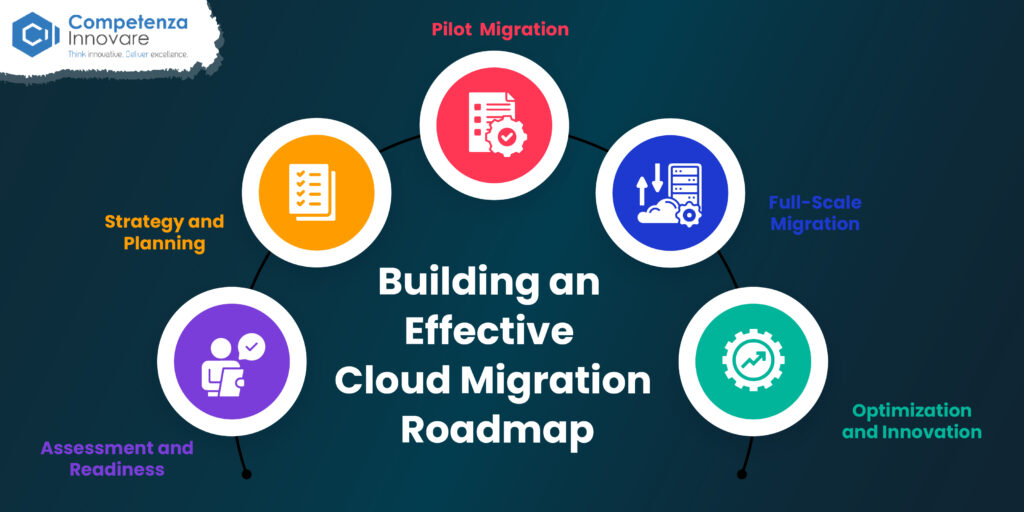
Building an Effective Cloud Migration Roadmap
It is important to develop the cloud migration roadmap properly, as it can help you to mitigate cloud migration risks, ensure a successful migration, and make for a smooth transition to the cloud. It helps to take out systems in a systematic manner instead of an ad hoc manner that can bring in issues and hamper performance during the cloud migration process.
Phase 1: Assessment and Readiness
During this phase, the assessment of the existing IT environment will take place, ahead of the move phase. This includes application discovery, workload assessment, cloud readiness, and cost, security & downtime risk assessments. This is a critical time of cloud migration plans.
Phase 2: Strategy and Planning
This involves having a proper migration plan in place. Define workloads, applications, prioritization, budget schedule, and resources. Security and compliance needs are also outlined, and any challenges that may arise in the future with cloud migration are eliminated.
Phase 3: Pilot Migration
During this, there is a limited selection of low-risk applications moved first. This allows for a cloud environment performance, security, and functionality test. All cloud migration errors are discovered early and addressed before going to full migration.
Phase 4: Full-Scale Migration
Remaining workloads are transferred in a planned manner if the testing is successful. The monitoring will be taken into account in terms of performance and downtime as well as data accuracy to ensure that the migration process goes along and business operates well.
Phase 5: Optimization and Innovation
As soon as migration is performed, the objective is then to boost efficiency. Cloud resources are optimized, costs are managed, and performance is monitored regularly. This is also true for adopting automation and cloud-native enhancements for a long-term gain.
A cloud migration strategy is a defined path for migrating to the cloud to improve the likelihood of successful migration, reduce cloud migration failure, and optimize cost and performance in the cloud.
Real-World Example: What Successful Cloud Migrations Have in Common
The migration to the cloud can involve a process with clear goals, plans, and execution, with ongoing optimization. A significant population of successful organizations is paying more attention to the road map of their cloud migration, understanding risks at the outset and taking time to get it right.
- Clear Planning: Good cloud migration plans (objectives and outcomes)
- Slow introduction: Step-wise introduction, not all of the changes in one go.
- Risk Management: Be aware of risks and avoid failure when migrating to the cloud.
- Dependency Mapping: Mapping the relation to the other systems and applications before the migration
- Compliance and security: Good security and compliance during the process
- Testing & monitoring: The continual progress to prevent cloud migration mistakes.
- Mature teams: who have a lot of migration project knowledge/experience.
- Cost containment: Track it right, or cloud migration can fail due to overspending.
- Ongoing optimization: Continuous improvements post-migration for improved performance
The following common factors reveal that strategy, structure, and regular monitoring are important for orchestrating successful migrations for long-term success in cloud migrations.
Conclusion
A successful cloud migration relies on effective planning, risk management, and execution. As I discussed in this blog, the great majority of failure to move to the cloud issues occur because there is poor planning, poor security, cost overruns, and insufficient dependencies. To achieve successful outcomes, organizations can prevent common pitfalls during cloud migration by following a solid cloud migration roadmap, using a cloud migration checklist, and applying cloud migration best practices. The competenza enables businesses to reach a smooth, secure, and successful cloud migration journey.
Frequently Asked Questions (FAQs)
What makes cloud migration projects fail?
Cloud migration projects have failed due to a lack of application dependency; weak security; a lack of skills; as well as unclear goals and poor cloud migration planning.
What do you mean by cloud migration failure?
Failure to achieve the goals of cloud migration, such as cost savings, performance improvements, enhanced security, or scalability, is considered a cloud migration failure.
What is the most significant cloud migration threat?
Data security risks, data loss risks, downtime risks, overspending risks, performance risks, and compliance risks are major risks.
What are the cloud migration challenges?
A cloud migration challenge can be anything that happens during migration, including legacy systems, data complexity, application dependencies, etc., or even a lack of skills to move to the cloud.
How can organizations prevent cloud migration failure?
There are steps that organizations can take in the form of a cloud migration roadmap, checklist and cloud migration best practices to help prevent failure.
What does a cloud migration checklist include?
The components on a cloud migration checklist vary from planning goals to evaluating workloads, establishing early dependency discovery and review, performing system testing, and optimizing the environment post-migration.
What makes migration to the cloud successful?
The essential components of a successful migration are having clearly defined objectives, a knowledgeable team, strong security and cost management, a planned migration phase by phase, and optimization on an ongoing basis.
What are the advantages of cloud migration?
Cloud migration planning helps in setting goals, controlling risks, managing costs, and a structured and smooth cloud migration.
What exactly is a roadmap for cloud migration?
A cloud migration roadmap would be a series of steps that would include things such as assessment, migration plan, phases of migration, and optimization after migration.
What is the role of cloud migration in Competenza?
Competenza offers all the tools and methods needed to plan, manage and implement a successful and smooth transition to the cloud, in order to overcome risks.