

Digital transformation is not merely about shifting offline processes to the Internet. To get smarter in how they work and serve their customers, in 2026, businesses are going to adopt smarter modes of operation through artificial intelligence, automation, cloud-native applications, real-time data, and connected digital platforms.
It is also not only about the adoption of new technology but also about how to generate a measurable business value. The organizations are getting cloud-based legacy systems, automating repetitive processes, enhancing the visibility of data, and creating more digital experiences that are flexible and can accommodate changes in business needs. As companies seek effective means to enhance efficiency, scale, and customer satisfaction, these priorities are becoming all the more important.
These shifts are defining the new trends of digital transformation services in USA, and AI-based operations, cloud modernization, intelligent automation, and data-driven decision-making is gaining importance across the US. Concurrently, companies are becoming more concerned about cybersecurity and the capacity to integrate new technologies with their current systems.
Insight into the major digital transformation trends in the year 2026 can assist organizations in determining the area where technology can impact the most. This article discusses the key trends that are affecting digital transformation of US businesses and what businesses can do to be ready to enter the next phase of digital progress.
Why Digital Transformation Matters for US Businesses in 2026
Digital transformation has become a business need, as opposed to being an IT project. This improvement of efficiency, reduction of manual labor, improvement of customer interactions, and responding to the dynamic needs of the customers in a faster manner are just a few of the ways in which US companies are leveraging modern technology so as to be more efficient and responsive to market dynamics.
Moving From Technology Adoption to Business Transformation
Business organizations are updating old systems, linking various departments, and automating recurrent activities. AI, analytics, and related data also aid in swift and superior decision-making by the teams. This brings a more business-oriented and results-driven digital transformation to US businesses.
The Growing Need for Agile and Scalable Business Systems
Companies require technology liable to expansive business. Scalability of apps, API-first design, cloud-based data, and scalability of infrastructure help you to connect the systems and add new features.
These are major enterprise digital transformation trends that are enabling businesses to remain flexible and competitive. An effective digital transformation strategy for 2026 ought to be aimed at realistic improvements that will aid in long-term growth.
Top Digital Transformation Trends Shaping US Businesses in 2026
The businesses in the US are embracing technologies that would enhance efficiency, customer experience, security, and scalability. In 2026, emphasis is on the application of technology in addressing actual business issues and developing quantifiable outcomes.
1. AI-Driven Digital Transformation
AI is infiltrating the business processes and is no longer implemented as a project. Businesses are processing data, automating their processes, and assisting workers with AI.
Key uses include:
- AI-powered workflow automation
- Predictive analytics
- AI-assisted decision-making
- Intelligent customer support
- Routine business tasks generated by AI.
- AI-powered knowledge management
- AI application with the old business systems.
This endears AI-driven transformation as one of the significant digital transformation technologies of 2026.
2. Intelligent Automation and Hyperautomation
Businesses are automating with AI to handle intentionally repetitive processes at an increased scale and with reduced human labor.
Common applications include:
- Finance: Invoice control and payment
- Customer care: Auto-request.
- HR: Paperwork and introduction of new staff.
- Operations: Workflow approvals (automated approvals)
- Logistics: Distribution and delivery.
- Data: Collection of data and automated data processing
Such a mix of AI and automation is becoming a significant component of digital transformation trends in 2026.
3. Cloud-First and Hybrid Cloud Transformation
Cloud transformation is no longer merely a case of modernizing applications from the local servers to the cloud. Applications are also being modernized, and the way cloud environments are being managed is being enhanced by the businesses.
Key areas include:
- Cloud-native applications
- Hybrid and multi-cloud environments
- Cloud application modernization
- Scalable infrastructure
- Cloud security
- Disaster recovery
- Legacy application migration
The focus is turning to cloud migration and, subsequently, cloud optimization and cloud-native transformation. That puts the cloud significantly closer to being a meaningful component of a real digital transformation strategy by 2026.
4. Data-Driven Decision-Making and Real-Time Analytics
Companies have to have faster access to correct information. Collaborating on data and live analytics makes sure that teams have knowledge of what is happening and act in real-time.
Businesses are using:
- Real-time dashboards
- Business intelligence
- Predictive analytics
- Data integration
- Data lakes and data warehouses.
- AI-powered analytics
- Customer behavior insights
- Operational analytics
The fundamental procedure is:
Data → Insight → Prediction → Better Decision
As these capabilities are helping businesses to make better decisions, they are becoming prominent trends of digital transformation within enterprises.
5. Legacy System Modernization and Composable Architecture
The systems that are old may cause issues in scaling businesses, as well as the inclusion of new technologies and quick response to transformation demands. Through modernization, the existing systems can be enhanced by companies without necessarily replacing everything.
Key approaches include the following:
- Legacy application modernization
- Application reengineering
- Microservices
- API-first architecture
- Modular applications
- Cloud migration
- System integration
- Modernizing individual components
This assists in making the digital transformation of US businesses more adaptable and in minimizing the problems of obsolete technology.
6. Cybersecurity and Zero-Trust Digital Transformation
With the evolution of the ever-more systems going to the cloud and becoming interconnected, the concept of cybersecurity must be included in the transformation strategy itself.
Important practices include:
- Zero Trust security
- Identity and access management
- Multi-factor authentication
- Data encryption
- Cloud security
- Continuous monitoring
- AI-assisted threat detection
- Secure APIs and integrations
The security-first strategy assists companies to secure their information and, at the same time, embrace new technologies in the digital world.
7. Personalized and Connected Digital Customer Experiences
Customers desire speedy and steady encounters in the digital medium. To engage the customers and offer more individualized services, businesses are employing technology to make contacts.
Examples include:
- AI-powered customer support
- Personalized recommendations
- Conversational AI
- Digital self-service
- Omnichannel experiences
- Mobile and web applications
- Real-time customer insights
To have digital transformation in US businesses, enhancement of customer experience can be used in assisting the engagement and customer loyalty.
8. Low-Code and No-Code Development
The low-code and no-code systems facilitate the creation of easy-to-write applications and workflow automation by low-code companies that require a shorter period of time to write code.
They also have the ability to assist organizations:
- Develop internal applications in less time.
- Automate routine workflows
- Create prototypes
- Reduce development bottlenecks
- Support business-led innovation
Still, it is also possible to have complex, security-sensitive, or highly integrated enterprise applications, which may require being written in custom code.
9. AI-Ready Digital Architecture and Connected Systems
Businesses are now strategizing about how they can prepare their technology fabrics to fulfill future AI and digital requirements. Today, the interconnections of applications, data, and new technologies are easier to make due to modern architecture.
Important characteristics include:
- API-first architecture
- Cloud-ready systems
- Modular applications
- Scalable infrastructure
- Connected data
- Secure integrations
- AI-ready platforms
This baseline will potentially allow companies to include new AI capabilities without doing an overhaul on their existing systems. It is increasingly playing a role in enterprise trends of digital transformation and long-term digital transformation strategy 2026.
How US Businesses Can Build a Digital Transformation Strategy in 2026
An effective digital transformation plan must begin with the clear business needs and not technology only. The US businesses can take a system-by-system approach to citizens in order to modernize systems, enhance processes, and deliver quantifiable outcomes.
1. Assess Existing Systems and Processes
A condition when you know exactly what is succeeding and what you have to do.
- Assess applications and systems in place.
- Determinant drives provide uphill manual activities.
- Find disconnected applications
- Access to check data and quality.
- Identify operational bottlenecks
2. Define Clear Business Goals
Introduce benchmarks to help bring the investments in the technology and business to par.
Common goals include:
- Reduce operating costs
- Improve customer experience
- Increase employee productivity
- Support faster decision-making
- Scale business operations
- Reduce manual work
3. Prioritize High-Impact Areas
It does not have to be that modernizing occurs at a single stroke of a business. Start at a place where change is of paramount importance.
Consider:
Business effect + technical practicality + cost and scalability.
This helps organizations to marshal resources towards achievable and actual enhancements.
4. Build a Phased Transformation Roadmap
A slow process can be adopted in addressing massive transformation projects in an easy manner.
Discovery → Strategy → Architecture → Development → Integration → Deployment → Optimization
Companies can make progress steps, measure the results, and refine them and then move to the next stage.
5. Measure ROI and Continuously Improve
Measurement of digital transformation must be post-implementation and must not be evaluated at launch.
Track key results such as:
- Productivity improvements
- Automation rates
- Operating costs
- Customer satisfaction
- System performance
- User adoption
- Revenue impact
- Time saved
The proposed practical digital transformation strategy 2026 is to be flexible and adjusted to changes in the process as the business objectives, customer needs, and technology continue to change.
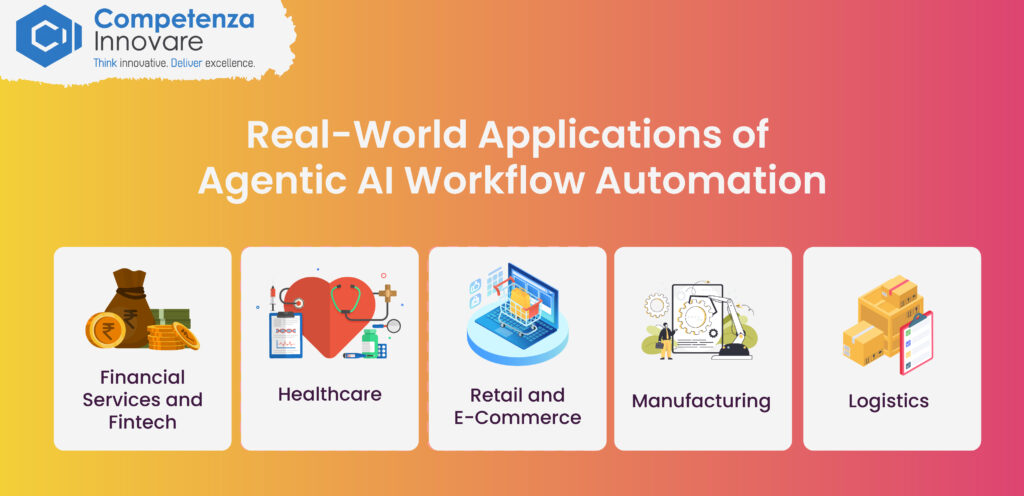
Digital Transformation Trends by Industry in the USA
Digital transformation is changing the dynamics of businesses in various fields. Organizations are automating, using AI, cloud platforms, analytics, and built-in systems with the aim of attaining better efficiency levels, better customer experiences, and decision-making. It is transforming the digital trends of transformation in the major sectors in the US.
Financial Services and Fintech
Some of the applications of AI within banks and fintech companies are fraud detection, automated financial operations, and real-time analytics. Online banking services are also enabling customers to get services more conveniently, and tailored financial experiences enhance customer interactions.
Healthcare
Health care organizations are moving towards platforms that are linked to enhance patient engagement and data management. Administration where AI-assisted workflows can be used encompasses administrative tasks; combined information systems will allow integration of information through healthcare application development.
.
Retail and E-commerce
Bringing AI suggestions and customized shopping experiences can help retail businesses learn more about the customers and understand their needs. Businesses are also developing quicker and easier customer experiences with inventory optimization, omnichannel commerce, and automated customer support.
Manufacturing
The manufacturers are also utilizing digital technologies to enhance production and supply-chain activities. Predictive maintenance will enable detecting problems with equipment earlier, and IoT-connected networks and real-time analytics will enable having more visibility over production.
Logistics
The logistics markets are integrating digital solutions to track in real-time, optimize routes, and automate warehouses. Business can also use predictive demand and supply-chain analytics to manage resources in a better and more responsive way to changes.
Challenges US Businesses May Face During Digital Transformation
Digital transformation has the potential to enhance performance within a business; however, companies might experience some difficulties in the implementation process. The idea of knowing these issues can assist businesses in preparing their transformation better.
- Legacy System Dependencies: Older applications are still in use by many businesses that can be very hard to upgrade or integrate with the newer cloud, AI, and data platforms. Such systems may need to be carefully planned to be modernized without necessarily changing the daily operations.
- Data Silos: Business data can be widely dispersed in applications and in departments. This makes it more difficult to create a holistic image of operations and data use when making real-time decisions. Such weak points may be alleviated with the help of more effective information combining and control.
- Security and compliance threats: other connections between applications, cloud services, and data sources may be connected to security threats. Access control, data protection, monitoring, and compliance practices are good practices that help to ensure that the transformation process of a business is good.
- Competency and skill deficits: New technologies demand skills in artificial intelligence, cloud computing, data analytics, cybersecurity, and the latest application software development. Companies may have to train the existing staff or resort to technological partners with experience.
- Resistance to Change: Digital transformation alters how employees operate and how processes are managed as well. Training, progressive roll-out, and effective communication will help to adapt the employees to new workflows and systems.
- Lack of clear ROI: Transformation projects ought to have identifiable business objectives early on. The productivity, cost savings, automation, customer satisfaction, and other business result measures will make companies know whether they are achieving value through their investment.
How to Prepare for the Next Phase of Digital Transformation
The most practical way that US businesses can be ready to take the next stage of transformation is by concentrating on feasible improvements that would favor the growth, efficiency, and customer requirements.
| Area | What Businesses Should Do |
| AI | Identify useful AI opportunities that solve real business problems. |
| Automation | Automate repetitive tasks and workflows to save time. |
| Cloud | Upgrade applications and infrastructure to be able to scale |
| Data | Relate business data and simplify its usage and accessibility. |
| Security | Create security in systems and adhere to zero trust. |
| Architecture | Be flexible, modular, and API-first. |
| Customer Experience | Deliver straightforward and interrelated online experiences. |
| Workforce | Develop employees’ AI and digital technology skills |
| Measurement | Monitor the performance, ROI and other business results. |
An early preparation will be useful in ensuring that businesses embrace new technologies better and establish a better platform of future digital transformation.
Building a Continuous Digital Transformation Strategy with Competenza
Digital transformation is an ongoing process. Businesses need to keep improving their systems and adopt technologies that are helpful and support the changing customer and market needs.
One of them is a simple approach.
Assess → Transform → Measure → Optimize → Innovate
The Competenza aids US companies in going digital, including artificial intelligence, automation, modernization of the cloud, legacy application modernization, creation of digital products, and a scalable architecture. With continuous support and streamlining, by 2026 businesses are able to continue to expand their digital potential and achieve more benefits of their digital transformation strategy.
Transform your business today with Competenza’s scalable digital solutions designed for sustainable growth and innovation.
Conclusion
Digital transformation 2026 is not just about embracing new technology. US businesses are getting better at operating and serving customers using AI, intelligent automation, cloud solutions, real-time analytics, modernizing their legacy applications, cybersecurity, and personalized digital experiences.
The best trends of US digital transformation aim at developing connected, scalable, secure, and flexible systems that enable genuine business objectives. Having a combination of the existing technology and the constant improvement, companies will be able to respond faster to the changing needs of the customers, become more efficient, and be prepared to develop in the future.
The best part of US businesses is to choose the right technologies and implement them in a clear plan and constantly evaluate and refine the impact.
FAQs
What are the digital transformation trends in 2026?
The key trends are AI-driven change, intelligent automation, cloud and hybrid infrastructure, real-time analytics, legacy modernization, cybersecurity, individualized customer experiences, and AI-enabling digital architecture.
What is AI changing about digital in US companies?
The use of AI in buses is via automation of the processes, data analysis, prediction, providing personal customer experience, and helping make faster decisions. It is embedding itself in mainstream business processes and is no longer a single technology.
What is the reason legacy modernization is significant to digital transformation?
Modernization of the legacy assists businesses to enhance the performance of their systems, their scalability, security, and integration. It also simplifies integration of old applications with cloud, artificial intelligence, automation, and new digital interfaces.
What technologies will propel digital transformation in 2026?
Some of the important technologies are artificial intelligence, generative AI, cloud computing, APIs, intelligent automation, data analytics, modern application architecture, and cybersecurity.
What must the US businesses do to create a digital transformation strategy in 2026?
To accomplish this, the process that corporations can follow is quite simple, and it is as follows: evaluate, create objectives, prioritize, create a roadmap, execute, measure, and streamline. This helps businesses to put a focus on business needs and measurable deliverables.
How long will the digital transformation take?
The plan will be guided by the volume of projects, existing systems, integrations, and technology requirements as well as business goals. Smoother endeavors might require weeks or months, and a significant enterprise change might be time-consuming.
How does digital transformation create the benefit of US businesses?
The digital transformation can help achieve operational effectiveness and efficiencies, reduce manual workloads, improve customer experiences, facilitate making better decisions, improve scalability, and help businesses more effectively and promptly respond to changes in the market.
How can businesses upgrade legacy systems without having to replace them?
Some of the ways businesses can upgrade systems over time are application reengineering services, APIs, microservices, cloud migration, and modular architecture. An incremental strategy will minimize the level of disruption and will enhance current technology.
What is the role of cybersecurity in digital transformation?
Security threats can increase due to increased integration of applications, cloud services, data, and devices by business organizations. Security controls that can be implemented to control the digital systems, as well as sensitive information, are access controls, encryption, zero-trust, and round-the-clock monitoring.
What can Competenza do in terms of digital transformation?
Competenza provides digital transformation to companies, such as AI integration, automation, cloud modernization, legacy app modernization, creation of digital products, and scalable architecture. Its strategy can guide companies in planning and developing till deployment and further optimizing.