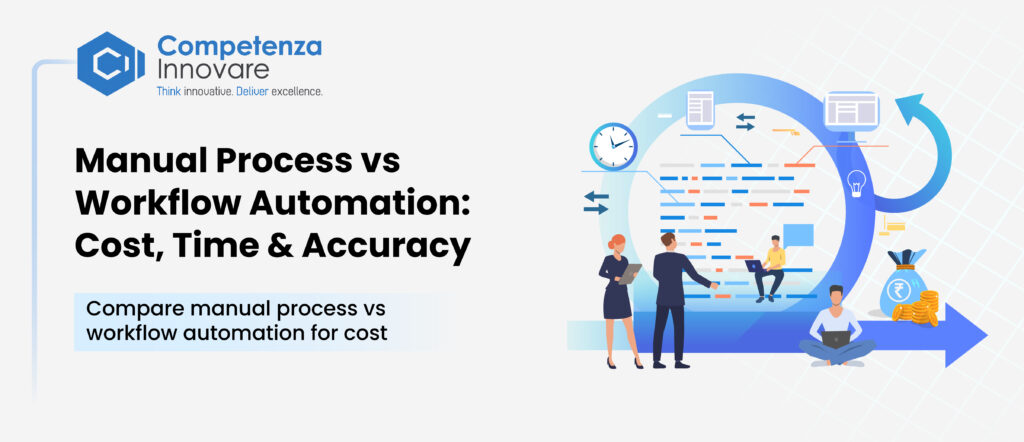
Manual Process vs Workflow Automation: Cost, Time & Accuracy Comparison
Compare manual processes and workflow automation by cost, time, accuracy, efficiency, scalability, and overall business performance.
Read Full Blog →Modern manufacturers require trustworthy software to operate production, inventory, supply chains, and daily operations. Custom manufacturing software solutions that we’ve developed have been used to automate routine processes, integrate various systems, enhance production visibility, and manage data in manufacturing.

These solutions assist businesses in simplifying their operations and cutting the number of people they need to operate and support scalable manufacturing, from manufacturing automation and production management through ERP integration, IoT, AI, and analytics.
Rated on
clutch
certified
strong development
team
organizations
trust us
Industries
served
Make manufacturing processes better with the software that is designed to meet your production, inventory, supply chain, automation and business requirements. Its manufacturing software development services can assist businesses to minimize manual labor, connect systems, enhance perspective, and effectively administer business operations.
Create custom manufacturing software based on your processes and business needs.
Deeply integrate manufacturing with business operations and manufacture ERP software development.
Streamline transportation planning and logistics operations with software that improves shipment visibility, route management, and delivery coordination.
Devise solutions in production management software development to run production activities.
Improve warehouse operations with software designed to manage inventory, storage, order fulfillment, and material movement across facilities.
Reduce manual repetition in the production process, where manual automation software is implemented to assist in accelerating and standardizing the manufacturing processes.
The manufacturing workflow automation can be used to simplify the daily activities in manufacturing. Automate approvals, notifications, and updates of data to save time and reduce manual work.
Implement AI in the manufacturing sector to make smarter plans, monitoring, and decisions.
Connect the machines, sensors, and equipment to the manufacturing IoT solutions to attain better availability of operations.
Implement AI in the manufacturing sector to make smarter plans, monitoring, and decisions.
Convert manufacturing data into valuable information with manufacturing analytics software.
Keep an eye on such key areas as the following:
Connect data between systems and create more understandable dashboards and assist in making better manufacturing decisions.
Use AI, IoT, automation, and analytics to improve production monitoring and process optimization, as well as operational decision-making.
The manufacturing processes are related to production, inventory, quality, procurement, and maintenance. The manufacturing processes are the area where automation software can reduce monotonous work plans and precision of the manufacturing process and give the teams a better grip on what is being done on a day-to-day basis.
Automate the production schedule, work orders, task assignment, and updates on production. This helps the teams to schedule production activities and also to make sure that an effective rate of work is done.
Track stock and update on materials; receive reorder notifications; and keep inventory records much easier. Interlinked processes can assist teams to have optimal visibility of their inventory and minimize manual adjustments.
Administer inspections, quality checks, and approvals and monitor issues using digital workflows. This assists in enabling teams to have a stable quality process and documentation.
Unify purchase request, approval, purchase order, and supplier workflow. It will be able to reduce the time taken in processing and make procurement processes easier.
Maintain equipment maintenance records, alerts, and maintenance plans. Workflows are mechanized and can help teams to adjust to maintenance needs promptly.
Automate data collection, production reports, dashboards, and notifications. Manufacturing data will be available in real-time, which will enable teams to trace the activities and make faster predictions.
Automate the production schedule, work orders, task assignment, and updates on production. This helps the teams to schedule production activities and also to make sure that an effective rate of work is done.
Track stock and update on materials; receive reorder notifications; and keep inventory records much easier. Interlinked processes can assist teams to have optimal visibility of their inventory and minimize manual adjustments.
Administer inspections, quality checks, and approvals and monitor issues using digital workflows. This assists in enabling teams to have a stable quality process and documentation.
Unify purchase request, approval, purchase order, and supplier workflow. It will be able to reduce the time taken in processing and make procurement processes easier.
Maintain equipment maintenance records, alerts, and maintenance plans. Workflows are mechanized and can help teams to adjust to maintenance needs promptly.
Automate data collection, production reports, dashboards, and notifications. Manufacturing data will be available in real-time, which will enable teams to trace the activities and make faster predictions.
Modern manufacturing software links production systems, machines, data, and business applications. It assists manufacturers to become more visible, automate, and run their work more efficiently.
It is capable of connecting IoT, analytics, and cloud technology with the ERP, production, inventory, and other systems and making it a more connected manufacturing environment.
ERP, inventory, accounting, IoT, cloud, and other systems are used in manufacturing software integration. This assists in diminishing information silos and maintains critical manufacturing data linked together.
Inventory management software assists in monitoring materials, elements, the finished products, and the stock quantity. It helps in monitoring inventory, purchase planning, reorder warnings, and reporting.
Optimization software of manufacturing processes assists in exposing process loopholes, delays, and similar issues. It applies automation, production information, and dashboards to advance workflows and productivity.
Production monitoring software assists teams to monitor production advancement, machine operation, downtime, work dealings, quality, and output. Real-time data assists in recognizing problems and staying in the path of production.
The production data are transformed into valuable information by manufacturing business intelligence solutions. Production, inventory, quality, machine performance, costs, and supply chain information can be displayed in dashboards.
Modernization of applications used in manufacturing assists in updating old systems that are hard to maintain or integrate. Some of the solutions can be cloud migration, API integration, application reengineering, and system upgrades.
Development of cloud solutions assists organizations to shift applications and data onto scalable cloud environments. These facilitate easier access, greater integration, centrally located data, and flexible operations.
Real creation of digital transformation solutions amalgamates software, automation, AI, IoT, cloud, and analytics to transform the operations. They are useful in reducing the number of physically working hands, increase visibility, and achieve scaled production.
The different manufacturers have different production flows and workflows as well as technology needs.
Our manufacturing software solutions are adaptable to adapt to different manufacturing models to support the production process,
inventory process, planning process, quality process, and operational processes.
Business related to single units or individual products and other listings that involve automotive products, electronics, machinery, and equipment.
In sectors where the products are prepared through formula, recipes, or continuous processes.
When manufacturers have customized products or small production runs and flexible workflows.
In manufacturing of standardized products through repetitive processes in large quantities.
In the case of firms that manufacture commodities in certain batches depending on their demand, formula, or any production needs.
In a business empire that applies multiple production methods in handling a variety of products, facilities, or production lines.
Our custom manufacturing software may be structured to fulfill your production model, business processes, and
operational needs to facilitate a more efficient and integrated manufacturing process.
Substitution of manual and disconnected processes by correlated digital processes that are more effective and visible.
The systematic approach is what directs us to create manufacturing software applications that will streamline the production process, stock control, automation, integration, and other day-to-day functionality. Designing with the ultimate aim of supporting you, each step is devoted to your unique requirements in production.
We initialize by getting to know about your production, the existing software, business challenges, and goals. It may be applied to set the appropriate scope and priorities of your project.
We take your processes through our process to identify what can be done to improve efficiency by automating manufacturing, integrating systems, optimizing processes, or modernizing an application.
We specify software architecture, workflow, integrations, security, data requirements, and scalability required to create an effective manufacturing solution.
We develop user-friendly interfaces and develop applications to the manufacturing teams, managers, and operational users. The solution is built around your business and production process.
We combine the software with cloud services and other required systems with ERP, inventory, CRM, IoT devices, and analytics platforms that would keep us in touch with manufacturing data.
To ensure the reliability of the solution in real-world work, we consider the solution on the basis of functionality, performance, security, integration, data flow, and manufacturing workflows.
The manufacturing applications that we develop in the cloud or enterprise environment that are supposed to be required and transition to the new system are made.
The performance is monitored once it is deployed; bugs are fixed, and the solution is raised as your production processes, technology, and business requirements evolve.
We construct intelligent manufacturing software technology through new technologies to simplify production, automation, and connectivity and see the operations.
Embrace machine learning and AI to help in making smarter decisions and automation in manufacturing.
Connect machines, sensors, and equipment to gather and track the real-time manufacturing data.
Scalable cloud-based technologies should facilitate interconnected manufacturing applications and data.
Dashboards and analytics helped Turn convert real-time data regarding the operations and production into value.
Integrate systems and automatize repetitive manufacturing processes.
Develop easy-to-use manufacturing applications in order to empower the teams, managers, and operational users.
Track and minimize waits with software customized to your manufacturing process and identify workflow failures, reduce wait times, and maximize resource utilization.
Modern-day manufacturing needs interconnected systems, machine workflow, and more visibility on both production and business processes. Manufacturing Key manufacturing use cases can be supported through custom manufacturing software, including the monitoring of inventory and manufacturing, quality, maintenance, analytics, and system integration.
Integrate inventory, purchasing, and production systems to have better visibility of materials and stock.
Track the manufacturing operations and machines, in real-time, with unified manufacturing boards.
Manage shipments, deliveries, and transportation workflows with better visibility and coordination.
Improve warehouse efficiency with connected inventory and fulfillment processes.
Provide AI and industrial IoT data to monitor equipment and predict trends that can help formulate an idea about the necessity to conduct maintenance.
Digitize the quality processes to ensure that inspections, approvals, and issue tracking are easier to handle.
Aggregate manufacturing data to determine how well you perform in production and where your processes can be improved.
Integrate manufacturing applications with ERP and other business applications to enhance the flow of information across business processes.
Automate during repetitive operations all over the production, procurement, inventory, and operations to reduce manual activity.
Modernize old-time manufacturing applications with the use of modern technologies, integrations, and increasing operational needs.
Bespoke manufacturing software assists companies to achieve more efficient business production, lessening manual operations, interconnecting systems, and improving visibility of daily operations.
Automate production and business processes, speed up workflows, and assist the teams in accomplishing daily processes.
Monitor production status, equipment, inventory, work orders, and other performance data on associated systems.
Substituting the use of spreadsheets, document management, and data entries with computer workflows, which are time-saving and less administrative work.
Link manufacturing systems and automate the updates on the information to reduce the number of duplicate records, unlinked information, and manual errors.
Combine real-time data, dashboards, analytics, and AI-beneficial insights to provide teams with insights into their performance and help them make faster decisions.
Identify the gaps in the workflow and repetitive work to enhance utilization of resources and overall efficiency of a process by detecting production delays, work bottlenecks, and repetitive work.
Implement scalable software that is capable of sustaining and supporting a larger production volume and user base, new production sites, and changing manufacturing requirements.
Combine ERP, inventory, CRM, IoT, analytics, cloud, and more to establish connected manufacturing processes and simplify data flow.
The manufacturing models, the workflow requirements, and technology requirements by various manufacturers differ. Our software is desktop-customizable and might be utilized during the manufacturing process, inventory, quality, automation, integration, and management processes.
Automate day-to-day manufacturing operations using software to:
Enhance production and supplier activities with:
Assign complex components and processes of production with the following:
Enhance production and service processes with:
Relate engineering and manufacturing processes to:
Continuous production of high volume with:
Control production and material processes using:
Help guide production with:
Work with complicated material and production using the following:
Handle customized and small-batch production with:
Connect between activities on lots of plants with
Design scalable solutions that support the following:
Manufacturing organizations need appropriate software that suits their activities, which integrates the already existing systems and helps their growth in the future. The Competenza offers specific manufacturing software solutions that focus on automation, integration, modernization, and operational efficiency.
Our software can be developed in line with your production workflows, inventory workflows, quality workflows, supply chain workflows, and your operational workflows in order to support your unique manufacturing needs.
Your processes form the basis of applications that we design rather than attempting to make your operations conform to a generic software platform.
Our solution is a combination of manufacturing automation software, workflow automation, AI, IoT, and analytics that would help to decrease manual work and enhance operational efficiency.
We do bind ERP, inventory, production, IoT, CRM, cloud, and other business systems to ensure there is improved flow of data and less disconnected processes.
Our practices to modernize older manufacturing applications include cloud migration, integration of APIs, reengineering of the application, and modern system architecture.
We develop scalable manufacturing software that can meet the higher production levels, new users, different location requirements, and new, changing business requirements.
Enhance scalable manufacturing software capable of sustaining expanding production, multiple sites, and additional users as well as evolving business requirements.
Software development in manufacturing refers to the development of digital applications that assist manufacturers to control the production, inventory, quality, supply chain, equipment, processes, and operations information.
Specific production processes, workflows, systems, and business requirements of a company are built on the basis of custom manufacturing software.
Automation of production planning, updates of inventory, procurement, approvals, reporting, quality workflow, document processing, maintenance alerts, and other repetitive processes is possible.
Applications of AI training can include predictive maintenance, demand forecasting, anomaly detection, quality surfacing, production analytics, and inventory and process optimization.
Smart manufacturing software enables the manufacturing systems, machines, operation data, automation, and analytics to understand each other in a bid to maximize visibility and decision-making.
Yes, APIs and integration technologies can be used to build manufacturing apps that we can integrate with ERP, CRM, inventory, accounting, supply chain, IoT, and other enterprise systems.
The interconnection of different machines, sensors, equipment, and operating systems is the method of collecting, surveying, and assessing the manufacturing data by developing IoT software.
It is capable of standardizing workflow, eliminating manual data entry, integrating technology, enhancing visibility of production processes, and offering analytical services towards better operational decision-making.
Yes, manufacturing can be modernized using reengineering, migration to cloud, API integration, upgrading of architecture, and modernization of user interface.
Software manufacturing can aid in production management, inventory, procurement, quality, maintenance, supply chain processes, analytics, automation, and integrating the systems.
Compare manual processes and workflow automation by cost, time, accuracy, efficiency, scalability, and overall business performance.
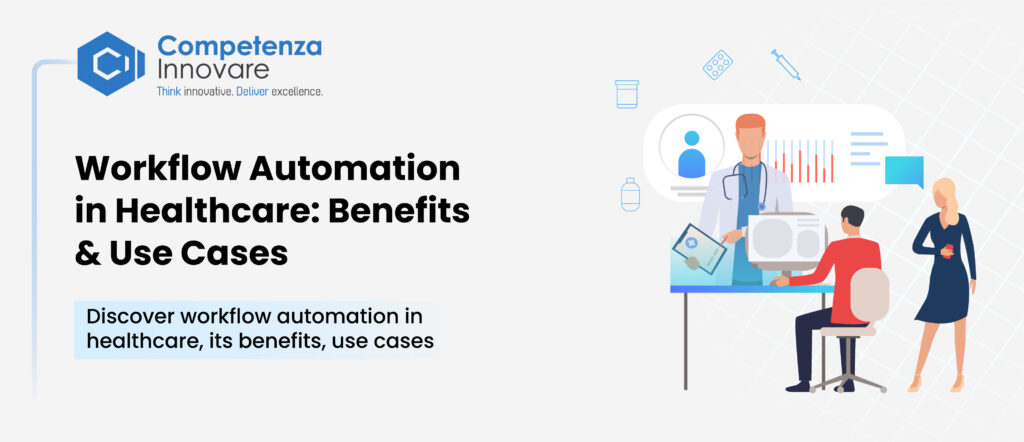
Read Full Blog →Explore healthcare workflow automation benefits, use cases, and examples that improve efficiency, accuracy, patient care, and outcomes.
Read Full Blog →Explore emerging digital transformation trends reshaping US businesses through AI, automation, cloud technology, and smarter strategies.

Read Full Blog →Share your project goals and constraints. We return a plan, timelines, and cost estimates

Building A1, Dubai Digital Park, Dubai Silicon Oasis, Dubai, United Arab Emirates

Unit 7/7, Sorrell Street Parramatta, 2150 NSW, Australia

258, Patrakar Colony Rd Dholai, Jaipur, Rajasthan, 302029